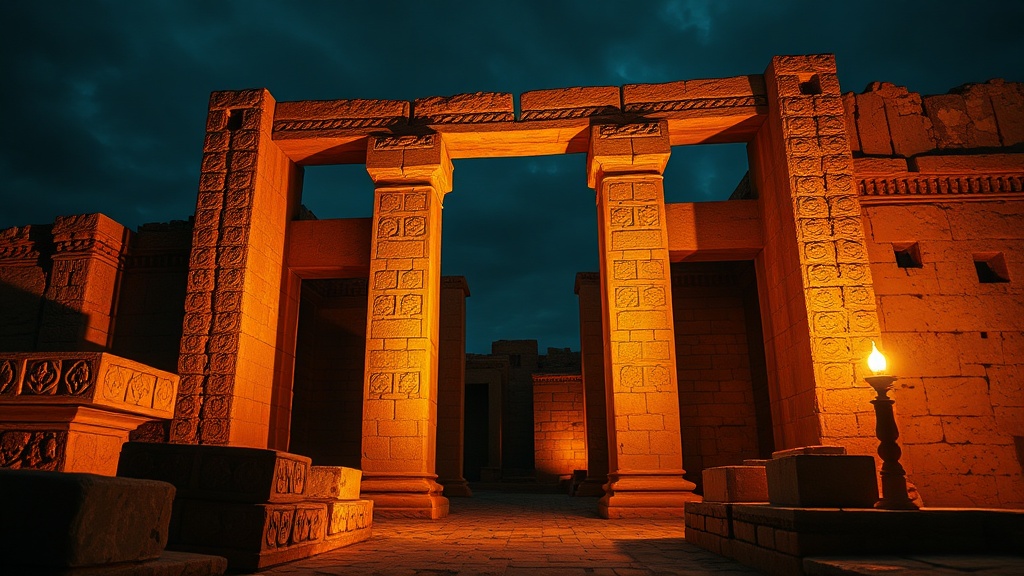
Beyond the Blocks: The Overlooked Ingenuity of Ancient Construction

What if the greatest architectural wonders of the ancient world weren't built solely by brute force, but by ingenuity we've largely forgotten?
It's a common misconception that ancient civilizations, lacking modern machinery, relied purely on massive manpower to construct their awe-inspiring monuments. This perspective often diminishes the brilliant engineering minds and innovative techniques that truly underpinned structures like the pyramids, Roman aqueducts, or Mesoamerican temples. Understanding the nuanced methods these societies employed offers a powerful corrective to our often-oversimplified view of historical progress and technological development. We're going to explore some of these clever solutions, revealing how our ancestors truly built big, often with surprising efficiency, demonstrating a mastery of physics and resourcefulness that deserves our deeper admiration.
How did ancient civilizations manage complex construction without modern tools?
The scale of ancient mega-projects, from the Great Pyramid of Giza to the Colosseum, can make us wonder how they were even possible. Without steel girders, hydraulic lifts, or even wheeled vehicles in many contexts, how did builders achieve such precision and grandeur? The answer lies in a sophisticated understanding of principles we now take for granted, coupled with meticulous planning and an astonishing organizational capacity.
Consider the Egyptians. While ramps and sheer numbers of laborers played a role in pyramid construction, the precise alignment of massive stone blocks, sometimes weighing many tons, suggests more than just brute strength. They clearly understood levers, simple pulleys, and the mechanics of friction reduction—perhaps using water or lubricants to slide heavy stones. Recent theories even propose internal ramps for the upper sections of the pyramids, indicating an evolving, adaptive engineering approach. Their quarrying techniques, using dolerite pounders and copper chisels, were laborious but remarkably effective, demonstrating a deep knowledge of stone properties.
Then there are the Romans, whose engineering prowess is perhaps best exemplified by their enduring infrastructure. Their secret weapon wasn't just organizational might, but a revolutionary material: concrete. Unlike modern Portland cement, Roman concrete utilized