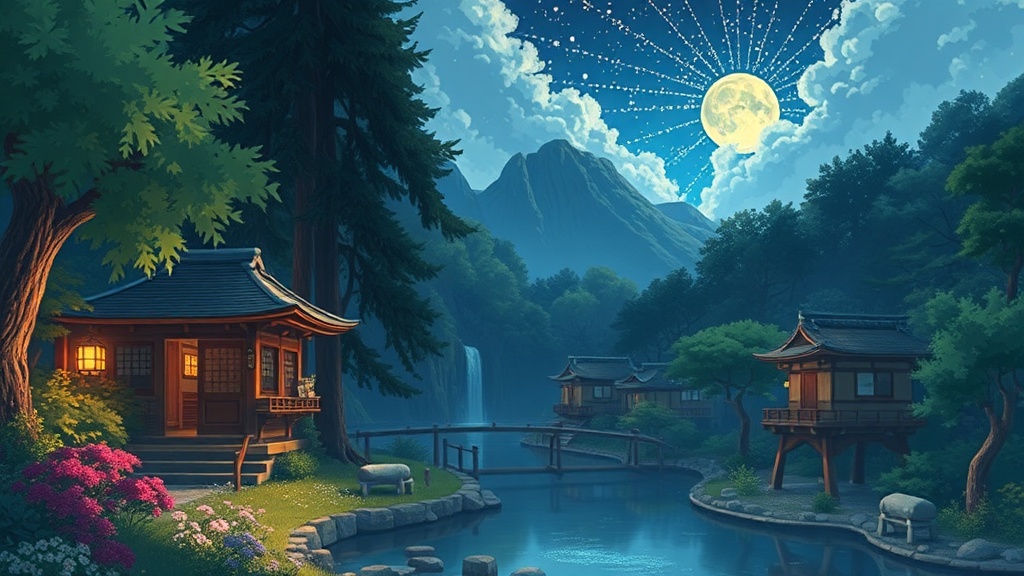
Finding Hidden Symbols in Studio Ghibli Landscapes

Have you ever felt like there was something more lurking beneath the surface of a quiet meadow in a Studio Ghibli film? This guide breaks down the specific visual cues, historical motifs, and Shinto-inspired symbols used by Hayao Miyazaki and his team to build their worlds. Understanding these details changes how you watch a film; it moves the experience from passive viewing to active observation of cultural history and spiritual symbolism.
What are the most common symbols in Studio Ghibli films?
The most frequent symbols found in Studio Ghibli films are elemental deities, spirits of nature, and the concept of "Ma" (emptiness or negative space). These aren't just random artistic choices. They are deeply rooted in Shintoism, the indigenous spirituality of Japan, which posits that kami (spirits or gods) inhabit everything from ancient trees to rushing rivers.
When you see a character interact with a forest, you aren't just looking at a backdrop. You're looking at a living entity. Take Princess Mononoke, for instance. The forest isn't just a setting—it is a character with its own agency and history. The presence of the Kodama (forest spirits) serves as a visual shorthand for the health of the ecosystem. If the Kodama are present, the forest is thriving. If they are gone, the balance is broken.
Other recurring symbols include:
- Water: Often represents purification, rebirth, or the boundary between the human world and the spirit realm.
- Flight: A recurring motif used to signify freedom, the shedding of earthly burdens, or a transition between states of being.
- Food: More than just "comfort food," the preparation and consumption of meals often represent domestic stability and the connection between people.
If you enjoyed analyzing the sensory details of historical eras, you might find interest in the lost sounds of the Victorian parlor, which also explores how small details define a culture.
How does Shintoism influence Ghibli's animation?
Shintoism influences Ghibli through the depiction of animism—the belief that all natural objects possess a spirit. This is why a simple stone or a weathered bridge in a film like Spirited Away feels heavy with significance. The animistic worldview ensures that nothing is truly "inanimate."
In the world of Studio Ghibli, the line between the mundane and the miraculous is paper-thin. You'll notice that characters often show immense respect to the natural world, even when it's inconvenient. This reflects the actual cultural practice of Shinto, where rituals are performed to appease or honor the spirits of the land. You can read more about the foundational principles of Shinto on Wikipedia to get a better grasp of these-philosophical roots.
Consider the way the characters interact with the environment. There is a distinct lack of "conquering" nature. Instead, there is a sense of coexistence. Even when technology is present—like the steam engines in Howl's Moving Castle—it often feels like a clumsy, heavy intrusion upon a much older, more graceful natural order. This tension is a central theme in many of Miyazaki's works.
The following table compares how different elements are used to convey meaning across the films:
| Element | Typical Meaning | Example Film |
|---|---|---|
| The Wind | Change, spirit, or freedom | Kiki's Delivery Service |
| The Sea | The unknown, the subconscious | Ponyo |
| Ancient Architecture | The weight of history and tradition | Spirited Away |
| Rain | Cleansing or melancholy | My Neighbor Totoro |
Why is the concept of "Ma" important to the viewing experience?
"Ma" is the Japanese concept of negative space or the "gap" between actions, and it is vital because it allows the audience to breathe and process the emotional weight of a scene. It is the intentional pause. It's the moment where the characters aren't talking, and the camera is just lingering on a cloud or a puddle of water.
Without "Ma," the films would feel rushed. Think of it like the difference between a fast-paced action movie and a slow, thoughtful piece of literature. Ghibli uses these pauses to build atmosphere. It's in these quiet moments that the true "soul" of the film resides. You aren't just watching a plot unfold; you're living in a space. (This is why Ghibli films are often described as "healing" or "meditative.")
This isn't just a stylistic quirk—it's a pacing tool. It forces the viewer to slow down. In a modern era of hyper-stimulation, this technique feels almost radical. It demands your attention by giving you nothing to look at but the stillness. It’s a way to ground the viewer in the physical reality of the world being depicted. If you look closely at the background art, you'll see that even the most "empty" scenes are filled with detail—the way light hits a leaf or how shadows stretch across a wooden floor.
The level of detail in these backgrounds is staggering. It's not just about being pretty. It's about creating a sense of place that feels lived-in and historically grounded. The artists often use hand-painted backgrounds to ensure a texture that digital tools sometimes lack. This gives the "world" a tactile quality. You can almost feel the humidity in the air or the roughness of the stone walls.
Here's the thing: the more you look, the more you see. The more you look, the more the "hidden" symbols reveal themselves. It turns a single viewing into a lifetime of study. Whether it's the specific way a tea set is placed on a table or the way a character's shadow falls, everything is intentional. It's a way to communicate complex ideas—like the passage of time or the loss of innocence—without a single word of dialogue.
For those interested in the technical side of how these visuals are constructed, looking into the history of Studio Ghibli's official archives can provide a deeper look into their production methods. It's a fascinating look at how traditional craftsmanship meets modern storytelling.
Watch for the small things. The way the light changes during a transition. The way a character pauses before a big decision. These aren't accidents. They are the heartbeat of the story. Next time you sit down for a Ghibli marathon, don't just watch the characters. Watch the world they live in. It has much more to say than you think.