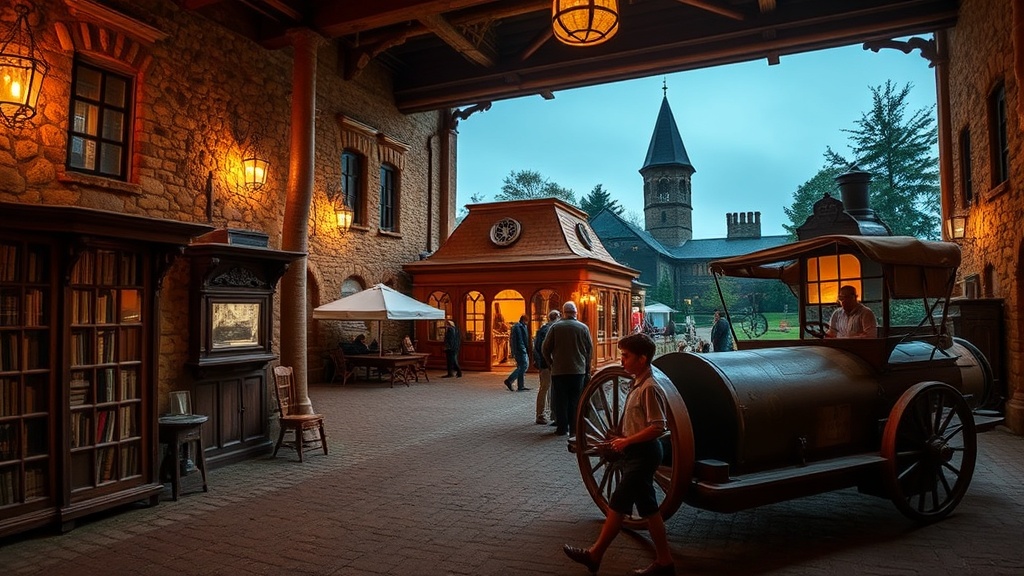
Recreating Eras: How Living History Museums Reshape Our Past

How Living History Museums Connect Us to the Past
This article will explore the profound impact of living history museums and historical reenactments on our understanding of bygone eras. You'll learn how these immersive experiences, far from being mere entertainment, serve as powerful educational tools that challenge conventional historical narratives and bring the past to life with vivid authenticity. We'll examine the dedication required to recreate historical accuracy, the diverse range of histories being interpreted, and the unique ways these sites engage visitors with the human stories that shaped our world.
For many, history feels like a collection of dusty dates and distant figures, confined to textbooks and static museum displays. But what if you could step directly into another time, smell the woodsmoke of a colonial kitchen, hear the blacksmith's hammer, or speak with a Civil War soldier about their daily life? This isn't science fiction; it's the core mission of living history museums and historical reenactment groups across the globe. These dedicated efforts go beyond simply showcasing artifacts; they strive to recreate the sights, sounds, and even the tactile sensations of history, offering an unparalleled opportunity for experiential learning.
What Drives Our Fascination with Historical Reenactment?
The human desire to connect with the past is deeply ingrained, manifesting in countless forms from genealogy to historical fiction. Living history, however, offers something more immediate and tangible—a chance for sensory engagement. When we encounter an interpreter dressed in period clothing, performing tasks with historically accurate tools, our abstract understanding of history gains depth. It transforms from an intellectual exercise into a more visceral experience. This embodied approach to history can foster a stronger sense of empathy for those who came before us, allowing us to grasp the challenges and triumphs of their lives in a way that simply reading about them can't.
Part of the allure also lies in the challenge of authenticity. Reenactors and living history professionals aren't just playing dress-up; they're engaged in rigorous research and skilled craftsmanship. They meticulously study primary sources—diaries, letters, inventories, architectural plans—to ensure every detail, from the stitching on a uniform to the recipe for a period meal, is as accurate as possible. This commitment transforms these sites into dynamic laboratories where historical theories can be tested and explored. For visitors, witnessing this dedication firsthand can be incredibly inspiring, prompting questions about the past that might never arise in a traditional setting.
“Historical reenactment is not about escaping the present; it's about understanding the present by looking through the lens of the past.” – Stephen Gapps
Moreover, living history often illuminates the 'how' and 'why' of daily existence in ways traditional museums sometimes struggle to convey. How did a colonial family prepare food without modern appliances? Why was a particular tool designed that way? How did people communicate before telephones and the internet? These are questions that come alive when you see them enacted. This interactive dimension—where visitors might be invited to try a quill pen, churn butter, or help with a harvest—makes history personal and memorable, particularly for younger audiences who benefit greatly from hands-on learning.
How Do Living History Sites Ensure Authenticity?
The pursuit of historical accuracy is paramount for any reputable living history organization, though defining and achieving 'authenticity' is a continuous and complex process. It involves far more than just wearing the right clothes; it demands an intricate understanding of material culture, social customs, technology, and even the mindset of a particular era. Researchers at these sites spend countless hours poring over archival documents, archaeological reports, and scholarly publications to reconstruct past environments and behaviors with fidelity.
This deep dive into historical records often reveals surprising nuances that challenge popular misconceptions. For example, a common myth about medieval life might be dispelled by a living history interpreter demonstrating the relatively advanced hygiene practices of certain periods. Or, a reenactor portraying an enslaved person might use their platform to highlight the incredible resilience and resistance within slave communities, offering a perspective often overlooked in broader narratives.
Key to this authenticity is the concept of material culture—the physical objects, resources, and spaces that people used. Recreating these objects, whether it's a meticulously built longhouse at a Native American living history site or a working printing press from the 18th century, provides invaluable insights into the daily lives and technological capabilities of past societies. Many sites employ skilled artisans who use period-appropriate techniques to craft tools, clothing, and household items, ensuring that the objects themselves are historical artifacts in their own right.