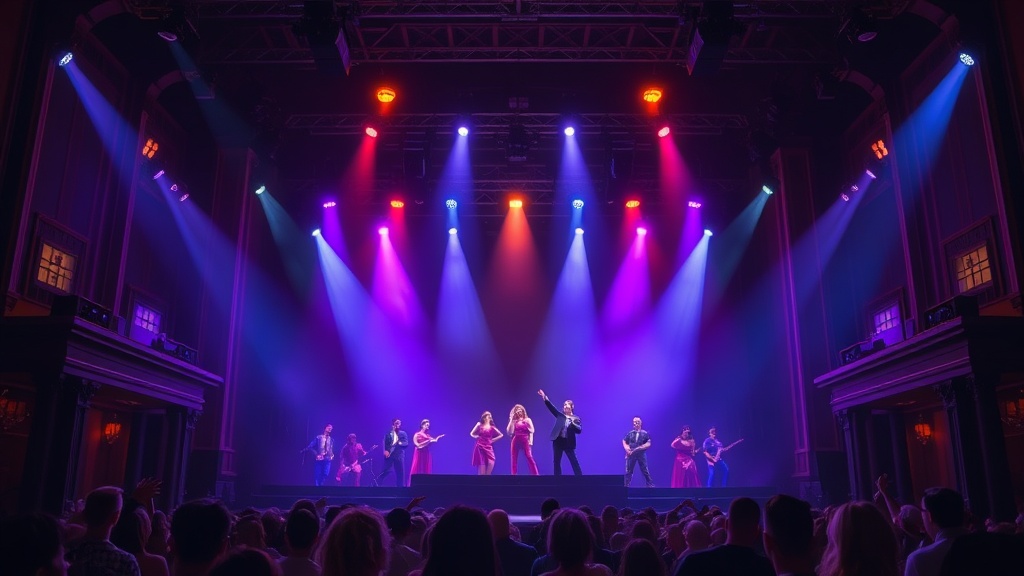
Tracing the Evolution of theatrical Spectacle through Stagecraft

Why We Misunderstand the Origins of Modern Spectacle
Most people assume that the grand, immersive experiences of today—the massive stage productions and high-tech theater—are relatively new inventions of the digital age. They believe that before the invention of electricity and complex mechanical rigging, theater was a simple, static affair of actors standing in front of a curtain. This couldn't be further from the truth. Historical theatrical production was a constant battle against the limitations of physics, light, and human endurance. Understanding how spectacle evolved isn't just about looking at costumes; it's about recognizing the technological leaps that allowed humans to witness the impossible on a physical stage.
To understand the weight of a performance, one must look at the machinery behind it. The transition from the Greek amphitheatres—which relied heavily on the natural topography of the earth and the movement of the sun—to the complex, indoor stages of the Renaissance marks a shift in how audiences consumed stories. It wasn't just about the script anymore; it was about the visual-auditory sensory assault. When we look at the history of stagecraft, we aren't just looking at a hobbyist's timeline; we are looking at the history of human ingenuity and the desire to manipulate reality.
How Did Early Stage Lighting Change the Audience Experience?
Before the invention of the incandescent bulb, lighting was a dangerous, visceral affair. In the 18th and 19th centuries, theaters used tallow candles, wax candles, and eventually gaslight. This changed everything. Gaslight allowed for the first real control over intensity and color, but it came with a heavy cost—the constant threat of fire. If you were sitting in the front row of a London theater in the early 1800s, you weren't just watching a play; you were sitting near a massive heat source that smelled of burning fat and fumes. This physical proximity to the light source created a specific kind of intimacy—one that was often uncomfortable and physically taxing.
The introduction of gas lighting meant that directors could finally manipulate the mood of a scene through light intensity. It allowed for the birth of the "moody" or "romantic" atmosphere. However, the technological leap to electric lighting in the late 19th century was the true disruptor. Electricity removed the flickering shadows and the heavy scent of smoke, allowing for much sharper detail and more precise control. This transition didn't just change the look of the stage; it changed the way actors performed. With brighter, more consistent light, the exaggerated gestures of the 18th century began to give way to more subtle, naturalistic acting styles. You can read more about the history of lighting technology via the Britannica archives to see how much the physics of light dictates the style of art.
What Made Mechanical Stage Effects Possible?
If you think a modern stage trapdoor is a high-tech marvel, consider the complex pulleys and levers used in the Elizabethan era. The "machine plays" of the Renaissance were the blockbusters of their day. They used heavy wooden machinery to simulate flying gods or crashing waves. These weren't just small tricks; they were massive, heavy-duty engineering feats. A single mistake in a rope tension could end a production—or a life. This era saw the rise of the "deus ex machina," a term that literally describes a god descending via a machine to resolve a plot.
The development of the "proscenium arch"—the frame around the stage—was a massive cultural shift. It created a "fourth wall," a psychological barrier between the actors and the audience. This changed the very nature of presence. No longer were the actors part of the same physical space as the viewers; they were now inside a controlled, illusory world. This separation allowed for more complex visual storytelling. The mechanics became more sophisticated, using sliding shutters and rotating platforms to change scenery almost instantaneously. This was the precursor to the cinematic cuts we see in modern films today.
How Did Material Culture Shape Costume Design?
Costumes are often treated as mere fashion, but in a historical context, they are the primary tools of characterization. In many eras, the ability to wear certain fabrics or colors was a strictly regulated social marker. A costume designer in the 17th century wasn't just picking an outfit; they were navigating a complex system of social hierarchies. Using silk or velvet wasn't just an aesthetic choice—it was a way to signal power and status to a crowd that understood these visual cues instantly.
The way a costume moves affects how a performer occupies space. A heavy, structured bodice dictates a certain posture, while a flowing silk gown dictates a different kind of movement. Historical researchers often look at the Metropolitan Museum of Art collections to understand how the weight and drape of historical textiles influenced the physical presence of people in their respective eras. When we watch a modern period piece, we are seeing a reconstruction of these physical limitations and advantages.
The Intersection of Engineering and Artistry
The history of the stage is the history of the machine. Every time a new technology emerged—be it the hydraulic lift, the electric spotlight, or the digital projection—the boundaries of what could be told on stage expanded. We see this in the way theatrical spaces themselves changed. From the open-air arenas of antiquity to the velvet-lined opera houses of the 19th century, the architecture was always built to serve the spectacle. The stage is a laboratory where art meets the physical laws of the world.
As we look back, we see that the "magic" of the theater was never actually magic. It was the result of thousands of nameless engineers, carpenters, and weavers working to bend the audience's perception. This tension between the artificial and the real is what keeps the medium alive. Whether it's a hand-painted backdrop or a digital hologram, the goal remains the same: to create a space where the impossible feels momentarily true.